Mustard Oil Packaging, Branding & Labeling: Startup & Business Guide
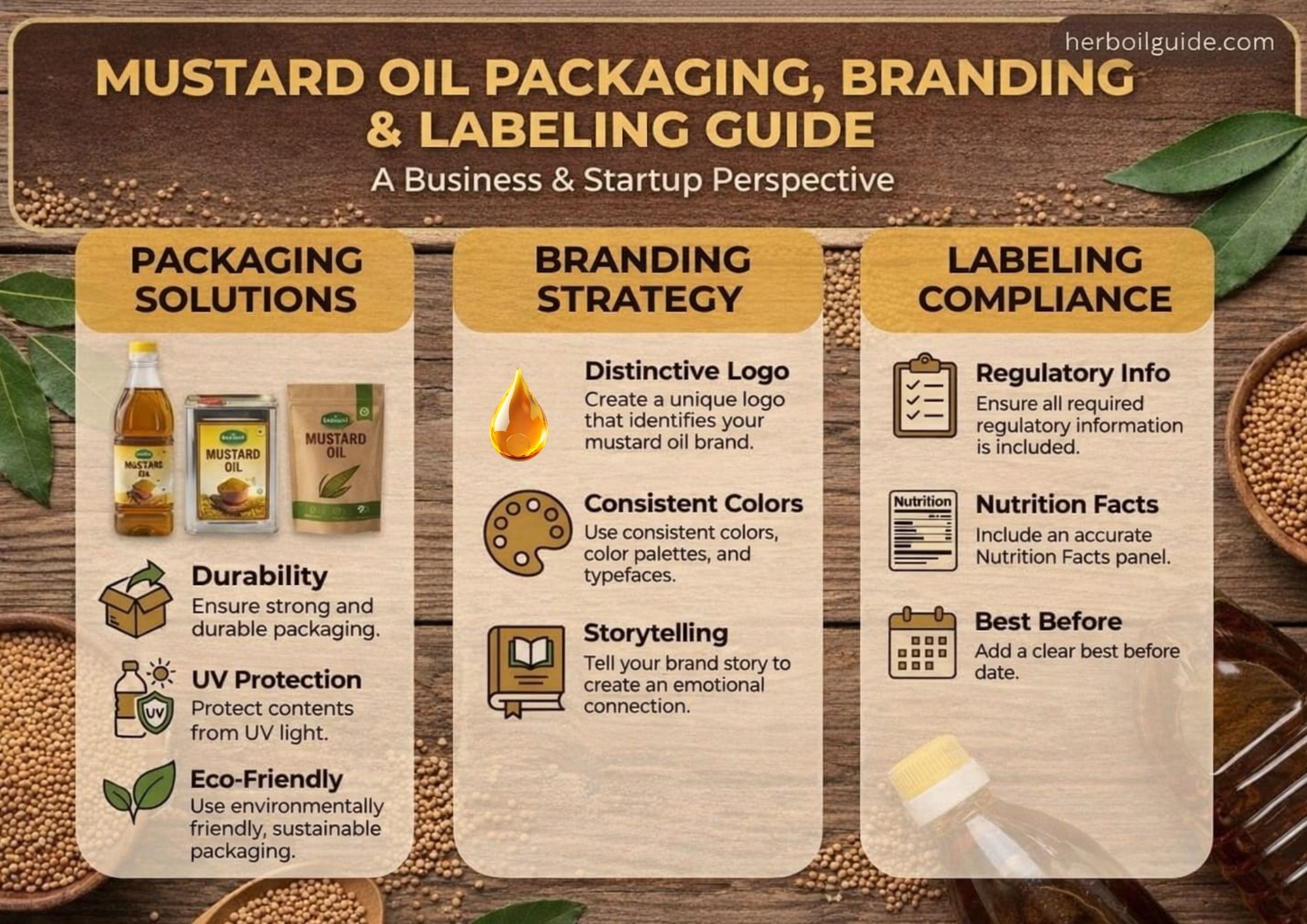
A Business & Startup Perspective
Starting a mustard oil business is no longer just about extraction and supply. Packaging, branding, and
labeling now determine market entry, pricing power, legal survival, and long-term scalability. For new
and growing mustard oil businesses, these three elements act as a commercial control system—protecting
product quality, building trust, and ensuring regulatory compliance.
This guide explains how entrepreneurs should approach mustard oil packaging, branding, and labeling strategically, not cosmetically.
- 1. Why Packaging, Branding & Labeling Decide Business Success
- 2. Market Understanding Before Packaging Decisions
- 3. Mustard Oil Packaging: A Business Decision
- 4. Branding Strategy for Mustard Oil Businesses
- 5. Mustard Oil Labeling: Legal Backbone
- 6. Labeling as a Business Risk-Management Tool
- 7. Cost vs Value: Packaging & Labeling Investment Analysis
- 8. Common Mistakes New Mustard Oil Businesses Make
- 9. Packaging & Labeling for Export-Focused Businesses
- 10. Small-Scale vs Scalable Business Comparison
- Conclusion
- 11. FAQs for Mustard Oil Entrepreneurs
1. Why Packaging, Branding & Labeling Decide Business Success
In the edible oil industry, mustard oil sits in a high-risk, high-scrutiny category because of frequent adulteration issues, strict food safety regulations, and its naturally strong aroma, which directly affects consumer perception. As a result, success in the mustard oil business depends not only on product quality, but also on how the product is presented, protected, and communicated to the market.
From a business standpoint, packaging plays a protective role by shielding mustard oil from light, air, and contamination. Proper packaging extends shelf life, maintains nutritional stability, and minimizes oxidation-related complaints, which directly reduces product returns and distributor losses.
Branding functions as a value amplifier. A recognizable, trustworthy brand signals consistency, safety, and professionalism, allowing businesses to command premium pricing and stand out in a crowded market where loose and unverified oils still exist. Strong branding transforms mustard oil from a commodity into a differentiated, reliable product.
Labeling acts as legal and commercial protection. Clear labels that disclose ingredients, nutritional values, batch numbers, and expiry dates demonstrate regulatory compliance and transparency. This not only protects the business from fines, recalls, and market bans, but also builds long-term trust with retailers, regulators, and export partners.
In practical terms, when a mustard oil business invests in compliant packaging, credible branding, and accurate labeling, business credibility naturally increases, regulatory alignment becomes easier, and access to both domestic and international markets becomes sustainable. This alignment is what converts a mustard oil operation from a short-term trade into a scalable, regulation-proof business.
2. Market Understanding Before Packaging Decisions
2.1 Identify Your Target Market First
Before selecting bottles, labels, or branding elements, a mustard oil business must clearly understand who the product is meant for. Packaging decisions that ignore the target market often result in slow movement, retailer resistance, or outright distributor rejection.
When the target audience is local retail consumers, the focus shifts toward cost-efficient, regulation-compliant packaging that keeps prices competitive while still meeting food safety standards. In contrast, health-conscious urban buyers associate value with transparency and quality cues, so they respond better to premium packaging, clear nutritional labeling, and visually clean designs that communicate purity and safety. For bulk buyers and export markets, packaging must prioritize durability, leak prevention, and logistics efficiency, as handling, transport, and long storage periods directly affect product acceptance.
In practical terms, the market you serve defines the expectations placed on your packaging. When packaging does not match customer expectations, even good- quality mustard oil struggles to gain repeat sales.
2.2 Brand Positioning Strategy
Once the target market is clear, the brand must establish how it wants to be perceived. A mustard oil brand may position itself as a mass-market edible oil, a premium cold-pressed product, or a traditional or regional specialty oil. Each positioning sends a different signal to consumers and retailers.
A mass-market positioning emphasizes affordability and accessibility, requiring simple, functional packaging. A premium cold-pressed positioning highlights purity, controlled processing, and health value, which demands high-quality containers, refined design, and detailed labeling. A traditional or regional positioning leans on heritage and authenticity, often blending cultural cues with modern compliance.
This relationship is linear and decisive: brand positioning determines packaging choices, and packaging directly influences pricing power. When positioning, packaging, and pricing are aligned, the brand communicates clarity and confidence, making it easier to build trust, secure shelf space, and scale sustainably in competitive mustard oil markets.
3. Mustard Oil Packaging: A Business Decision, Not a Cost Item
3.1 Packaging Objectives for Mustard Oil Businesses
In a mustard oil business, packaging functions as a profit-protection system, not a discretionary expense. Effective packaging extend the shelf life of mustard oil by limiting exposure to air and light, reduces oxidation-related quality loss, and prevents leakage during transport and storage. Well-designed containers also lower transportation losses, discourage adulteration, and ensure compliance with food safety regulations.
When packaging fails to meet these objectives, the result is predictable: faster spoilage, higher customer complaints, product returns, regulatory penalties, and long-term brand damage. From a commercial perspective, investing in the right packaging directly safeguards margins and market credibility.
3.2 Choosing Packaging Material Wisely
The choice of packaging material directly influences product stability, handling efficiency, and brand perception.
- PET Plastic Bottles are widely used in mass markets because they offer the lowest initial cost and easy scalability. When food-grade and heat-resistant PET is used with proper sealing, it provides acceptable protection for everyday consumption oils. However, these bottles rely heavily on strong labeling, quality caps, and airtight seals to maintain trust and compliance.
- Glass Bottles (Dark or Amber) signal premium quality and are often associated with cold-pressed or health-focused mustard oil brands. Dark glass limits light exposure, slowing oxidation and preserving bioactive compounds. The trade-off lies in higher logistics risk, as glass increases breakage potential and transport costs.
- Tin Containers are commonly preferred for bulk buyers and export markets. Their strong barrier against light and oxygen improves long-term stability, making them suitable for large volumes and extended storage. Although tins carry a higher upfront cost, they reduce spoilage risk and are often more economical at scale.
In practical business terms, the packaging material chosen determines how well the oil maintains quality, which in turn shapes consumer confidence and brand reputation over time.
3.3 Packaging Size Strategy (SKU Planning)
Successful mustard oil brands rarely rely on a single pack size. Instead, they use a multi-SKU strategy to capture different buying behaviors and price sensitivities.
Smaller packs such as 200–250 ml attract trial users and first-time buyers, lowering the entry barrier to the brand. Medium packs like 500 ml and 1 liter serve regular household consumption and form the core revenue segment. Larger packs such as 5 liters or 15 liters target bulk buyers, food service operators, and institutional customers.
This size diversification spreads risk, improves shelf visibility, and stabilizes cash flow by balancing high-volume sales with higher-margin retail packs.
3.4 Tamper-Proof Features (Mandatory for Brand Trust)
In today’s regulatory and consumer environment, tamper-proof packaging is no longer optional. Features such as induction-sealed caps, leak-proof closures, and tamper-evident rings protect the oil from contamination and reassure buyers that the product has not been altered after packing.
For the business, these safeguards reduce liability, prevent brand misuse, and strengthen consumer trust. In markets where adulteration concerns are high, visible tamper-proof features often influence purchase decisions as strongly as price or brand name.
Overall, packaging choices create a direct chain reaction: the right material and design improve product stability, which builds brand reputation and enables long-term market success in the mustard oil industry.
4. Branding Strategy for Mustard Oil Businesses
4.1 Brand Naming & Identity
In the mustard oil industry, a brand name is the first trust signal a customer encounters. A strong name should clearly suggest purity, authenticity, and reliability without sounding exaggerated or misleading. Names that imply honesty, tradition, or natural sourcing tend to resonate well, especially in food and wellness categories.
From a business standpoint, the name must also be legally registrable and distinct. Copying or closely imitating popular mustard oil brands may seem tempting in the short term, but it creates serious legal risks and weakens long-term credibility. A unique, compliant brand identity protects the business, supports trademark registration, and builds sustainable brand equity.
4.2 Visual Branding That Sells Confidence
Visual branding plays a decisive role in how consumers judge quality—often before they read a single word on the label. Clean typography improves readability and signals professionalism, while a consistent color palette helps consumers recognize the brand across shelves and platforms.
In mustard oil branding, colors such as yellow, mustard brown, and earthy green work effectively because they subconsciously connect with oil seeds, freshness, and tradition. Cultural familiarity adds emotional appeal, but excessive symbols, text, or graphics can clutter the label and reduce trust. Successful brands balance tradition with clarity, ensuring the product looks authentic, modern, and safe.
4.3 Claim Management: Legal vs. Marketing Reality
Marketing claims can attract attention, but they also carry responsibility. Common mustard oil claims such as "Colled-pressed kachi ghani",” or “100% pure” are powerful only when they are accurate and verifiable.
From a business perspective, every claim printed on the label must be supported by documentation, process validation, or testing records. Unsupported claims expose the brand to regulatory penalties, product recalls, and reputational damage. Clear, honest claims—properly disclosed on labels—reduce legal risk while strengthening consumer confidence.
In practical terms, responsible branding aligns promise with proof. When brand claims match actual processing and labeling disclosures, the result is lower compliance risk, higher trust, and stronger long-term positioning in the competitive mustard oil market.
5. Mustard Oil Labeling: Legal Backbone of the Business
5.1 Mandatory Label Information
Labeling is not a design formality—it is the legal identity of a mustard oil product. Every pack sold in the market must clearly display the product name, net quantity, and a truthful ingredient declaration, typically stated as 100% mustard oil. These details allow regulators and consumers to immediately identify what is being sold and in what quantity.
Missing or unclear information can result in fines, product seizures, or even temporary sales bans. From a business perspective, accurate mandatory labeling reduces compliance risk and protects distribution continuity.
5.2 Manufacturer & Traceability Details
A compliant mustard oil label must make the producer fully traceable. This includes the manufacturer’s name and address, along with a batch number, manufacturing date, and best-before or expiry date. These details link every bottle to a specific production run.
Strong traceability works as a safety net for businesses. If a quality issue or consumer complaint arises, batch-level identification allows targeted recalls instead of full product withdrawal, saving both cost and brand reputation.
5.3 Food Safety & Quality Certifications
Mustard oil is classified as a sensitive edible oil in many countries, which places it under stricter regulatory scrutiny. Depending on the market, labels may require food safety registration numbers such as FSSAI, AGMARK certification, or approval from a local food authority.
These certifications are not optional checkboxes. They signal regulatory compliance, unlock access to organized retail and export markets, and build long-term buyer trust. For any mustard oil business aiming to scale sustainably, proper certification-backed labeling is a non-negotiable foundation.
6. Labeling as a Business Risk-Management Tool
For mustard oil businesses, labeling functions as a built-in risk-management system rather than just a regulatory requirement. Clear, accurate, and compliant labels reduce the chances of legal disputes by demonstrating transparency and adherence to food safety laws. When regulators or inspectors review a product, a well-structured label becomes the first line of defense.
Strong labeling also builds confidence among distributors and retailers. Wholesalers are far more likely to stock products that clearly display certifications, batch details, and expiry information because it lowers their own compliance and recall risks. This trust directly influences shelf placement and long-term partnerships.
From an operational standpoint, proper labeling simplifies audits and inspections. Consistent label formats, correct declarations, and traceable batch information make compliance checks faster and less disruptive, saving both time and resources.
Finally, accurate labeling is essential for export eligibility. International markets demand strict documentation, traceability, and regulatory alignment. Businesses that invest in compliant labeling from the beginning position themselves for uninterrupted operations, market expansion, and long-term continuity—turning labeling into a strategic asset rather than a cost.
7. Cost vs Value: Packaging & Labeling Investment Analysis
7.1 Initial Costs
For a mustard oil business, packaging and labeling involve upfront investments such as bottles and caps, professional label printing, and mandatory certifications or licenses. Although these expenses may feel significant to new entrepreneurs, they usually account for only 5–10% of total production costs. This small percentage plays a critical role in determining how safely, legally, and competitively the product reaches the market.
7.2 Long-Term ROI
When viewed from a value perspective, quality packaging and compliant labeling deliver strong long-term returns. Well-packaged mustard oil supports a higher MRP, as consumers associate proper sealing, clear information, and attractive design with trust and quality. Improved packaging also reduces oxidation, leakage, and spoilage, directly lowering product losses and customer complaints.
From a distribution standpoint, clear labeling and professional presentation make the product easier to sell, improving distributor margins and willingness to stock the brand. Over time, consistent visual identity and reliable labeling strengthen brand recall, which is essential in a competitive edible oil market.
In contrast, cutting corners in packaging or labeling often leads to regulatory issues, reduced shelf life, weak consumer confidence, and limited scalability. What appears as short-term savings frequently turns into long-term losses, making packaging and labeling one of the highest-return investments in the mustard oil business.
8. Common Mistakes New Mustard Oil Businesses Make
Many new mustard oil ventures fail not because of poor oil quality, but due to avoidable packaging and labeling mistakes. Copying competitor labels is one of the most common errors; it weakens brand identity and exposes the business to legal risks. Using vague or exaggerated claims like “100% pure” or “chemical-free” without documentation can also trigger regulatory action and loss of trust.
Another critical mistake is ignoring shelf-life realities. Mustard oil is sensitive to light, heat, and oxygen, and poor packaging accelerates spoilage and customer complaints. Low print quality, spelling mistakes, or unclear fonts further damage credibility, especially in a food product category where trust is everything. Finally, many startups skip legal or regulatory consultation, assuming it can be handled later—this often results in fines, product seizures, or forced relabeling that can stall growth early on.
Simply put, these mistakes can damage reputation, drain cash flow, and kill a brand before it ever scales.
9. Packaging & Labeling for Export-Focused Mustard Oil Businesses
For businesses targeting export markets, packaging and labeling standards are significantly stricter. International buyers expect clear ingredient disclosure, accurate nutritional information, and compliance with global food safety norms. Longer shelf life becomes essential, which requires superior packaging materials that protect the oil during extended storage and transportation.
Durable containers that can withstand handling, temperature changes, and long logistics chains are a must. Labels must meet international standards, including legibility, language requirements, batch traceability, and expiry clarity. Importantly, export success does not start overseas—it begins with strong domestic compliance. Brands that follow strict local regulations from day one find it far easier to scale into global markets.
10. Small-Scale vs Scalable Mustard Oil Business Comparison
| Factor | Small Local Seller | Scalable Brand |
|---|---|---|
| Packaging | Basic, cost-driven | Protective, standardized, shelf-life focused |
| Branding | Generic, seller-dependent | Trust-driven, consistent identity |
| Labeling | Minimal or incomplete | Fully compliant, traceable |
| Growth Risk | High and unpredictable | Controlled and scalable |
In the mustard oil industry, the difference between a small local seller and a scalable brand lies in how the business is structured from the beginning. Small local sellers typically rely on basic, cost-driven packaging that focuses on short-term sales rather than long-term product stability. Their branding is often generic and heavily dependent on personal trust in the seller, while labeling tends to be minimal or incomplete, offering little traceability or regulatory protection. As a result, growth remains high-risk and unpredictable.
In contrast, scalable mustard oil brands invest in protective, standardized packaging designed to preserve shelf life and product quality. Their branding is trust-driven and consistent, helping consumers recognize and rely on the product across different markets. Fully compliant and traceable labeling supports food safety regulations, distributor confidence, and export readiness. This structured approach significantly reduces business risk and enables controlled, sustainable growth over time.
This comparison highlights a key business truth: scalability is built into systems, not intentions. Businesses that invest early in proper packaging, branding, and labeling create a foundation for controlled growth, regulatory safety, and long-term market success in the mustard oil industry.
Conclusion
In the mustard oil business, packaging, branding, and labeling are strategic business tools—not cosmetic expenses. The right packaging protects oil quality and shelf life, strong branding builds market trust and price authority, and accurate labeling ensures legal compliance and long-term business stability. For startups and growing mustard oil manufacturers, investing early in compliant packaging materials, clear brand positioning, and transparent labels reduces regulatory risk, improves distributor confidence, and supports scalable growth. Ultimately, businesses that treat mustard oil packaging and labeling as core operational decisions—not afterthoughts—are the ones that achieve sustainable profits, stronger brand recall, and lasting success in competitive edible oil markets.
11. FAQs for Mustard Oil Entrepreneurs
Q1. Is branding necessary at a small scale for mustard oil?
Yes. Even basic branding is necessary for a small-scale mustard oil business because it builds customer trust, distributor confidence, and product credibility. Clear labeling, hygienic packaging, and a simple brand identity help differentiate mustard oil, justify better pricing, and support steady market growth.
Q2. Can startups begin with plastic bottles for mustard oil?
Yes. Startups can begin packaging mustard oil in plastic bottles if they are food-grade, leak-proof, properly sealed, and correctly labeled. Using approved plastic packaging helps control costs while ensuring product safety, shelf-life stability, and regulatory compliance in the early stages of the business.
Q3. How important is labeling accuracy for mustard oil?
Labeling accuracy is legally critical in the mustard oil business because it ensures regulatory compliance, consumer transparency, and product traceability. Incorrect or missing information can lead to penalties, product recalls, or business suspension, making accurate labeling essential for long-term protection and trust.
Q4. Does better packaging increase profits in the mustard oil business?
Yes, better packaging indirectly increases profits in the mustard oil business by building customer trust, reducing leakage and returns, extending shelf life, and enabling better pricing margins. High-quality packaging also improves brand perception, which supports repeat purchases and long-term growth.
Q5. What packaging size is best for selling mustard oil?
The most popular packaging sizes for mustard oil are 500 ml, 1 litre, and 5 litre bottles, as they suit both household and bulk buyers while optimizing production and logistics costs.
Q6. What material is best for mustard oil packaging?
Food-grade PET plastic and dark glass bottles are best for mustard oil packaging because they protect against oxidation, leakage, and light exposure, helping maintain quality and shelf life.
Q7. How does packaging affect mustard oil shelf life?
Proper packaging protects mustard oil from air, moisture, heat, and light, which slows oxidation and helps maintain freshness for a longer period.
Q8. Is tamper-proof sealing mandatory for mustard oil?
Yes. Tamper-proof seals are mandatory in most regions to ensure consumer safety, product authenticity, and regulatory compliance.
Q9. Can small mustard oil brands compete with large companies?
Yes. Small mustard oil brands can compete by focusing on purity, cold-pressed quality, transparent sourcing, and regional trust, supported by professional packaging and labeling.
Q10. What information must be printed on a mustard oil label?
A mustard oil label must include product name, net quantity, manufacturing date, expiry or best-before date, batch number, nutritional information, and license details as per food safety laws.
Q11. Does attractive branding help mustard oil sales?
Yes. Attractive branding improves first-time purchases, shelf visibility, and perceived quality, directly influencing sales performance.
Q12. Is online selling profitable for mustard oil startups?
Yes. Selling mustard oil online reduces distribution costs and allows startups to reach health-conscious and premium buyers through direct-to-consumer channels.
Q13. How can startups reduce packaging costs without lowering quality?
Startups can reduce packaging costs by standardizing bottle sizes, sourcing locally, and ordering in bulk, while maintaining food-grade quality.
Q14. Why is dark-colored packaging preferred for mustard oil?
Dark-colored bottles protect mustard oil from light-induced oxidation, preserving flavor, aroma, and nutritional stability.
Q15. Can improper packaging cause mustard oil spoilage?
Yes. Improper packaging can lead to oxidation, leakage, contamination, and reduced shelf life, affecting quality and consumer trust.
Q16. Does packaging influence consumer trust in mustard oil?
Yes. Clean, sealed, and well-labeled packaging signals quality, safety, and professionalism, which strongly influences buying decisions.
Q17. Is eco-friendly packaging important for mustard oil brands?
Yes. Eco-friendly packaging appeals to environment-conscious consumers and strengthens brand image without compromising product safety.
Q18. How often should mustard oil packaging be reviewed or upgraded?
Packaging should be reviewed every 1–2 years to align with market trends, regulatory updates, and consumer expectations.